Somebody says “African music” and the room pictures Lagos. Afrobeats has earned that. But West Africa holds far more than one city’s sound, and one of the strangest, most hypnotic rhythms on the whole coast comes from Sierra Leone and still barely gets written about. It is called bubu, and it deserves a proper introduction.
What bubu actually is
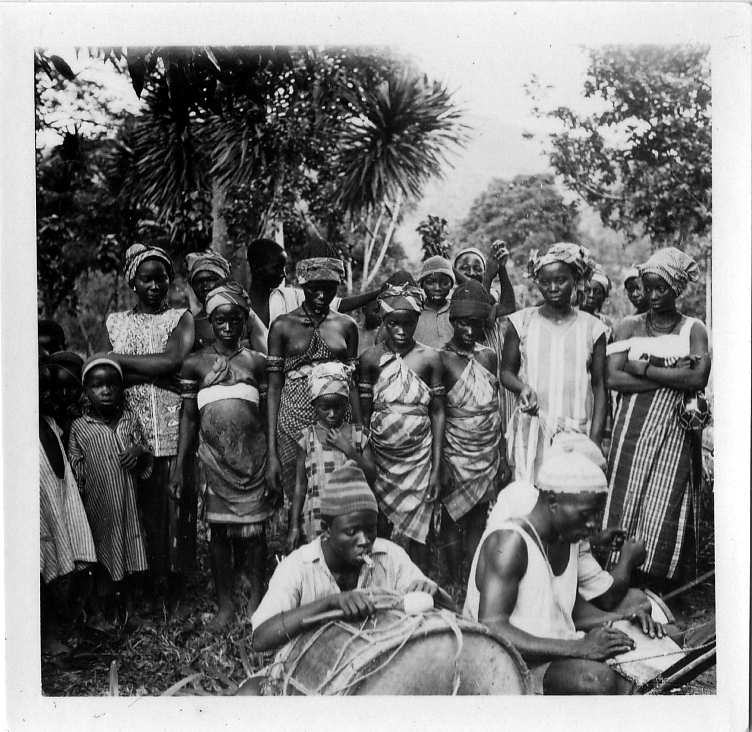
Bubu is processional trance music from the Temne people of Sierra Leone. The traditional form is built on bamboo flutes, blown in interlocking patterns, driven by percussion, and it moves. Literally moves: bubu is played walking, in processions, the ensemble and the crowd traveling together through the streets. The rhythm is fast, circular, and relentless in the way trance music anywhere in the world is relentless. It does not build to a drop. It locks in and carries you.
For generations it lived in village ceremonies and street processions, passed down by ear, community music before anything else. That is a big part of why the wider world never got a clean introduction to it.
Janka Nabay, the Bubu King
The man who dragged bubu into amplifiers was Janka Nabay. In the 1990s he took the flute-and-percussion engine and rebuilt it with drum machines, keyboards, and electric guitar, and Sierra Leoneans crowned him the Bubu King. During the country’s civil war his songs were everywhere at home, and the story turned dark: rebels played his music too, and he eventually left, landing in the United States.

That could have been the end of it. Instead it became the second act. In New York he formed Janka Nabay & the Bubu Gang with local musicians, and in 2012 the album En Yay Sah came out on Luaka Bop, the label David Byrne co-founded. Suddenly critics who had never typed the word “bubu” were reviewing it. Nabay died in 2018, back in Sierra Leone, and the international coverage of bubu music has been thin ever since. One man carried an entire genre’s passport, and when he passed, the genre went quiet again on the world stage.
What to listen for
Put on En Yay Sah. The tempo hits you first: bubu runs hotter than most West African pop, closer to a sprint than a groove. Underneath it, the flutes, or the synth lines standing in for them, loop short phrases that stack against each other instead of taking turns. Over all that speed the voice floats almost casually, the calm center of a spinning wheel.
If you have ever loved a hypnotic groove that refuses to resolve, you already have ears for this.
Why I write about this
TheMusicAuntie sits in the Afro-fusion lane, and Sierra Leone’s sounds run underneath it. My song Na Mi Sef I Get is sung in Krio, the language closest to me. Rhythms like bubu and gumbe are threads of a musical history that almost nobody is documenting for a general audience. The classics of this coast deserve the same song-by-song attention people give to Motown.
So this is the first of a series. The auntie is going to keep explaining the records. Next up: gumbe, the rhythm that crossed the Atlantic twice.